Chang'e-6
The Chang'e-6 mission was the most technically advanced lunar exploration endeavor in China's space history, achieving three major technological breakthroughs and one world first. Specifically, it mastered the technologies of lunar retrograde orbit design and control, intelligent sampling as well as takeoff and ascent from the far side of the moon. Additionally, it successfully accomplished the world's first automatic sampling and return from the far side of the moon, setting another world record for China's space endeavors.
At 5:27 p.m. (Beijing Time) on May 3, 2024, a Long March-5 rocket was launched on schedule, successfully sending the Chang'e-6 probe into its predetermined orbit. At 2:07 p.m. (Beijing Time) on June 25, 2024, the returner of the Chang'e-6 lunar probe landed precisely in its designated area in Siziwang Banner, north China's Inner Mongolia autonomous region, bringing back samples collected from the moon's far side for the first time in human history. This mission took a total of 53 days and marks the first time that humans have collected lunar soil samples from the far side of the moon.
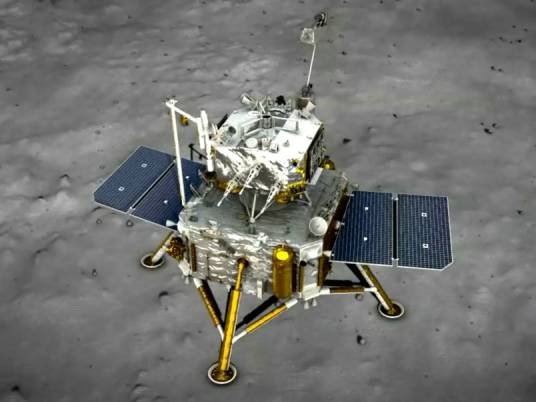
The geological structure, material composition, and early cosmic environment of the far side of the moon are shrouded in mystery. The Chang'e-6 probe landed at the edge of an impact crater known as the Apollo Basin, located in the northeast of the South Pole-Aitken (SPA) Basin on the far side of the moon. The crater is the largest, deepest, and oldest known impact crater on the moon. Scientists will study the subsurface samples collected with a drill and the surface samples grabbed with a robotic arm, hoping to unravel significant scientific mysteries about the evolution of the moon and the solar system. The Chang'e-6 mission has two main scientific objectives:
1)To conduct regional topography detection and geological background survey at the landing site in the South Pole-Aitken Basin on the far side of the moon, obtain in-situ analysis data related to the lunar samples, and establish the link between in-situ detection data and laboratory analysis data;
2)To carry out systematic and long-term laboratory research on the samples from the far side of the moon, and analyze the structure, physical properties and material composition of the lunar regolith, so as to deepen research on the origin and evolutionary history of the moon.
In addition, in-situ investigation and analysis of the landing area on the far side of the moon and laboratory analysis of the lunar samples will be carried out. Chang'e-6 brought back samples from the far side of the moon for the first time, which will hopefully provide crucial insights into the dichotomy of the moon and help us gain a more complete understanding of its history. Samples from the South Pole-Aitken Basin might include materials from the moon's deep interior or even its mantle, offering valuable data for studying the moon's internal composition.
The Chang'e-6 probe consists of an orbiter, a returner, a lander and an ascender. The lander carries six types of scientific payloads: a panoramic camera, a landing camera, a lunar regolith structure detector, a lunar mineralogical spectrometer, a national flag display system and a panoramic camera turntable, together with one payload data processing unit. The scientific data acquired by the payloads are used to investigate the surface topography and geological structure of the landing area, survey the material composition and resources of the lunar surface, and study the shallow internal structure of the moon. All payloads remained in good condition and operated stably, successfully completing the Chang'e-6 mission. The National Space Science Center of the Chinese Academy of Sciences led the development of the Chang'e-6 payload subsystem.
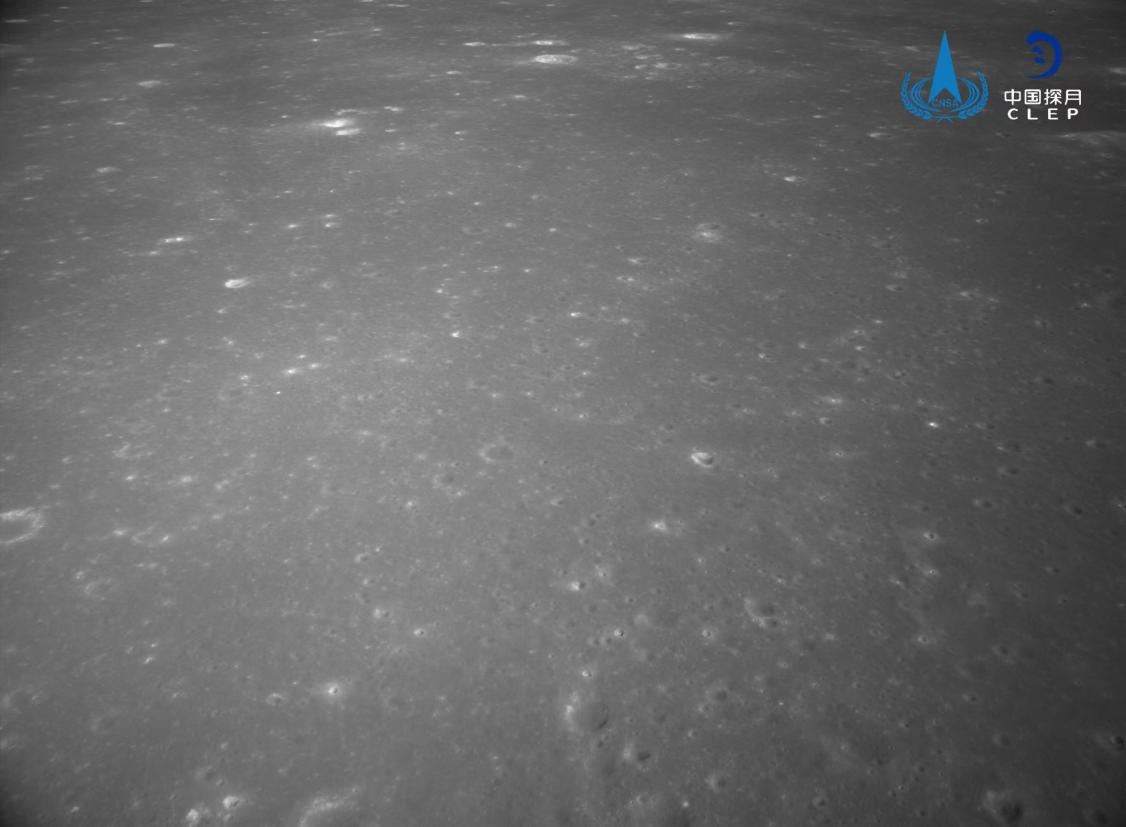 Figure 1: Image taken by the landing camera of the Chang'e-6 lander (Photo: CNSA)
The Chang'e-6 probe carries four inherited payloads -- a landing camera, a panoramic camera, a lunar mineralogical spectrometer and a lunar regolith structure detector -- as well as four international cooperation payloads: France's lunar radon detector, the lunar surface negative ion analyzer of the ESA, Italy's laser retroreflector and Pakistan's CubeSat. Scientific data from all payloads are relayed by the Queqiao-2 relay satellite instead of being transmitted directly to ground stations. This mission involved cooperation with the European Space Agency (ESA), France, Italy, and Pakistan in operating four payloads, obtaining valuable firsthand scientific data.
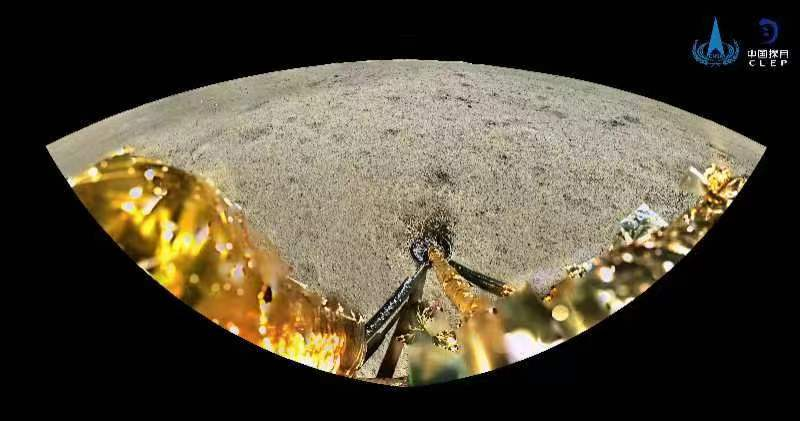 Figure 2: Image taken by the panoramic camera of the Chang'e-6 lander (Photo: CNSA)
In April 2019, the CNSA issued the Announcement of Opportunity for International Payloads on the Chang'e-6 Mission. Following the solicitation and selection of two batches of proposals, four international payload projects were confirmed: the ESA lunar surface negative ion analyzer, the French lunar radon detector, the Italian laser retroreflector and the Pakistani CubeSat.
ESA lunar surface negative ion analyzer: to detect negative ions on the lunar surface and study the interaction mechanism between plasma and the lunar surface;
French lunar radon detector: to conduct in-situ detection of radon isotopes on the lunar surface and study the transport and diffusion mechanism of volatiles in the lunar environment;
Italian laser retroreflector: to use its position on the far side of the moon for joint ranging and positioning studies with other lunar exploration missions;
Pakistani CubeSat: to perform in-orbit imaging and verify nanosatellite lunar-orbit exploration technology.
On May 8, the cube satellite from Pakistan successfully separated from the Chang'e-6 probe after the near-moon braking maneuver, captured images of the moon, and transmitted them back, thus successfully completing its mission. On May 10, the CNSA handed over the data from the cube satellite to the Pakistani side. On June 2, after the lander and ascender module landed on the moon, France's lunar radon detector, and the lunar surface negative ion analyzer of the ESA, smoothly carried out scientific explorations. Italy's laser retroreflector is working normally; the radon detector operated on the lunar surface for 32 hours, and the lunar surface negative ion analyzer functioned for 3 hours and 50 minutes. The performance of these international payloads has been outstanding.
China's Chang'e-6 mission collected 1,935.3 grams of samples from the moon's far side, the China National Space Administration announced on June 28, 2024. The samples were handed over to the Chinese research teams at a ceremony held in Beijing. The researchers will carry out the storage and processing of the lunar samples as planned and initiate scientific research work. The lunar samples, which were collected from the far side of the moon for the first time in human history, hold unique scientific significance as they will further enhance the understanding of lunar evolution, accelerate the pace of peaceful exploration and utilization of lunar resources, and serve as an important asset for all humanity, the CNSA said. A series of research findings by Chinese scientists on the samples collected by the Chang'e-6 mission from the moon's far side have unveiled the volcanic activity, ancient magnetic field, water content and geochemical characteristics of the moon mantle, shedding the first light on the evolutionary history of its dark side. Four studies were published as cover articles in the latest issue of Nature. On September 14, 2026, the China National Space Administration (CNSA), the Permanent Mission of China to the United Nations and other International Organizations in Vienna, and the United Nations Office for Outer Space Affairs (UNOOSA) held a handover ceremony at the UN headquarters in Vienna. China officially presented the United Nations with the lunar sample first-ever collected from the far side of the Moon by the Chang'e-6 mission.
Search and download:https://moon.bao.ac.cn/mall/moonDATA