Tianwen-2
With a designed cycle of approximately 10 years, the mission aims to explore and sample the 2016HO3 asteroid and return the samples to Earth, followed by an exploration of the 311P main-belt comet. The Tianwen-2 mission consists of the general engineering system and five major systems, namely the probe, the launch vehicle, launch and recovery, tracking and control, and ground application. The Tianwen-2 mission represents a significant step in China's new journey of interplanetary exploration.
A Long March-3B carrier rocket blasted off from the Xichang Satellite Launch Center in southwest China's Sichuan Province at 1:31 a.m. (Beijing Time). And about 18 minutes later, the Tianwen-2 probe was sent into a transfer orbit from Earth to the asteroid 2016HO3, according to the China National Space Administration (CNSA). The spacecraft unfolded its solar panels smoothly, and the CNSA declared the launch a success.
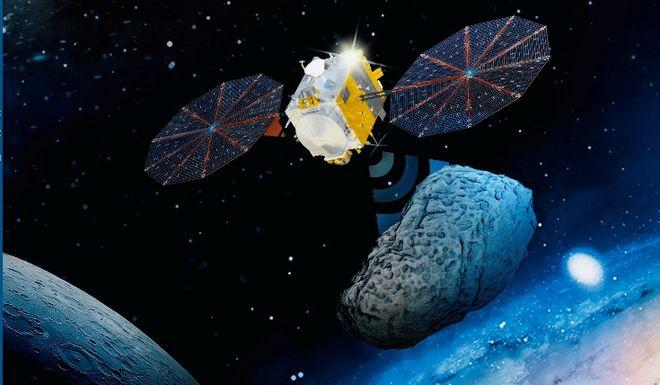
The mission aims to overcome key technological challenges, including sampling on a low-gravity celestial surface, high-precision autonomous navigation and control, as well as trajectory design, according to the CNSA. It will also provide exploration data and precious samples for frontier scientific research on the origin and evolution of asteroids. The scientific objectives focus on determining multiple physical parameters of the asteroid and the main-belt comet:
1)Scientifically, the mission focuses on measuring physical parameters of the two celestial targets, including their orbital dynamics, rotation, size, shape and thermal properties.
2)The mission will also investigate the topography, composition and internal structure of the two celestial bodies, and possibly study the materials ejected by the main-belt comet.
3)After the samples are brought back to Earth, laboratory analysis will be carried out to determine the samples' physical properties, chemical and mineral composition and structural characteristics.
The probe is equipped with a suite of scientific instruments, including cameras, a visible and infrared imaging spectrometer, a thermal emission spectrometer, radar, a magnetometer, and analyzers for charged and neutral particles, as well as for ejected materials, according to the CNSA. Tianwen-2 is equipped with 11 scientific instruments: a medium-field-of-view color camera, a multispectral camera, a visible and infrared imaging spectrometer, a thermal emission spectrometer, a detection radar, a magnetometer, a charged and neutral particle analyzer, an ejected material analyzer, a narrow-field-of-view navigation sensor, a laser integrated navigation sensor and a rotating diffraction hyperspectral camera.
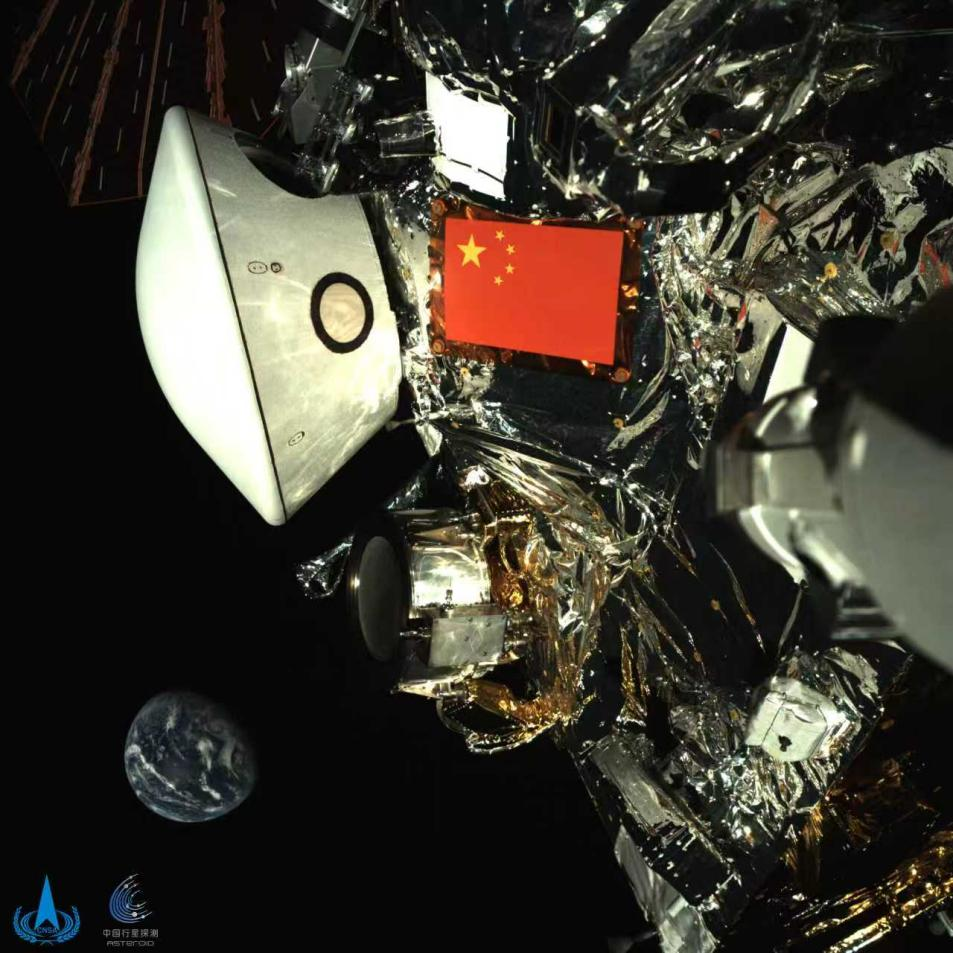 Figure 1: The Tianwen-2 probe photographed together with Earth (Photo: CNSA)
These instruments will provide a full scan and analysis of the asteroid's topography, internal structure and material composition, providing a crucial basis for decisions on the subsequent sampling phase. Known as a quasi-satellite of Earth, asteroid 2016HO3 orbits the Sun and appears to circle around Earth as well, remaining a constant companion to our planet. Dubbed as "cosmic fossils," asteroids preserve critical information about the solar system's infancy, scientists say. A distinctive feature of the Tianwen-2 mission is its strategy of flying and probing simultaneously, with decisions made throughout the process.
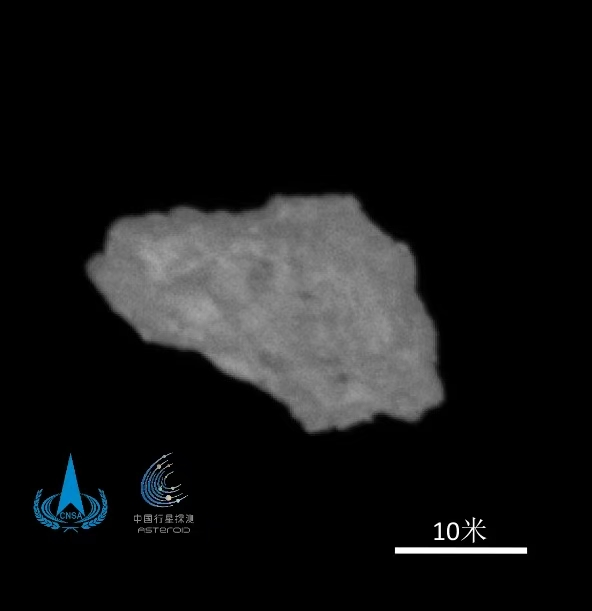 Figure 2: Image of asteroid 2016HO3 taken by the Tianwen-2 probe from a distance of about 20 kilometers on July 2, 2026. (CNSA/Handout via Xinhua)
Given the asteroid's weak gravity, sampling poses unique challenges. A hard surface may result in bouncing back, while a loose surface may cause sinking. The control of the probe must be precise and just right. From about 2,000 kilometers away from the target, the probe autonomously carries out precise target capture, gradual approach, scientific exploration and sample collection. The probe will gradually approach the target, carrying out close exploration by circling and hovering over the asteroid to determine the sampling area, with a strategy of flying and probing simultaneously.
The probe features an innovative sampling system with three operation modes -- touching, hovering and anchoring -- to cope with varying surface conditions of the asteroid. Based on the in-situ exploration results and under the guidance of the ground team, the probe will select the safest and most effective option to acquire precious samples from the asteroid.
Known as a quasi-satellite of Earth, asteroid 2016HO3 orbits the Sun and appears to circle around Earth as well, remaining a constant companion to our planet. Scientific research suggests that the asteroid 2016HO3 may preserve primitive materials from the early solar system. Investigating this asteroid could yield valuable insights into the composition, formation, and evolutionary history of the solar system's early materials. The second target, 311P, a celestial anomaly discovered in the main asteroid belt between Mars and Jupiter, occasionally spews out materials and resembles a comet with tails. While it exhibits compositional traits with traditional comets, it maintains the orbital characteristics of an asteroid. Exploring this unique object will deepen human understanding of the composition, structure, and evolutionary mechanisms of small celestial bodies.
China's Tianwen-2 probe has successfully arrived at a distance of 20 kilometers from the asteroid 2016HO3, enabling it to begin scientific exploration after an approximately 400-day journey of about 1 billion kilometers, the China National Space Administration (CNSA) announced on July 6, 2026. During the approach phase, the probe acquired imagery of the asteroid. The mission team leveraged optical navigation data gathered during the close approach to refine the asteroid's ephemeris, reducing the positional uncertainty, previously determined solely through ground-based observations, from hundreds of kilometers down to the kilometer scale, according to the CNSA. Next, the probe will progressively conduct more detailed scientific exploration to acquire data on the asteroid's morphology, material composition and internal structure, laying the groundwork for subsequent sample collection operations, the CNSA said.
Search and download:https://moon.bao.ac.cn/mall/Planet